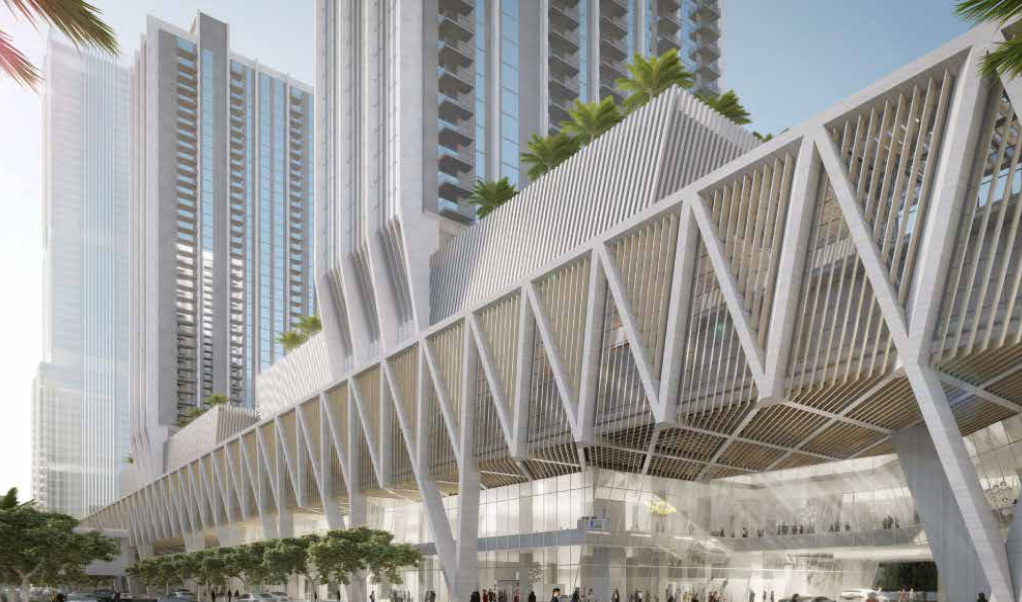
For decades, governments have tried to solve congestion by building transit — and then tried to solve housing affordability separately. The result has been predictable: transit lines that underperform and housing developments that lock residents into long, car-dependent commutes.
The GTA Crosstown starts from a different premise: transit and housing must be built together.
When people can live within walking distance of reliable, high-quality transit, the benefits compound. Commute times drop. Transportation costs fall. Car ownership becomes optional rather than mandatory. Local businesses thrive. Emissions decline. Transit ridership increases.
This is why the Crosstown envisions each station as a complete, rail-integrated community, not just a stop on a line. Housing — including affordable housing — is not an afterthought. It is a core component of the project’s design.
Importantly, affordability is tied to access. Affordable housing built far from transit often traps households into higher overall costs due to transportation. By contrast, affordable homes located near frequent regional transit reduce the total cost of living and improve long-term stability for residents.
This approach also helps the region grow without endless sprawl. Instead of pushing development farther outward, growth is concentrated along an existing corridor that already supports infrastructure. Farmland and green space are protected, while density is focused where it makes the most sense.
The housing crisis cannot be solved by supply alone, and the transit crisis cannot be solved by tracks alone. The GTA Crosstown proposes solving both — together.
