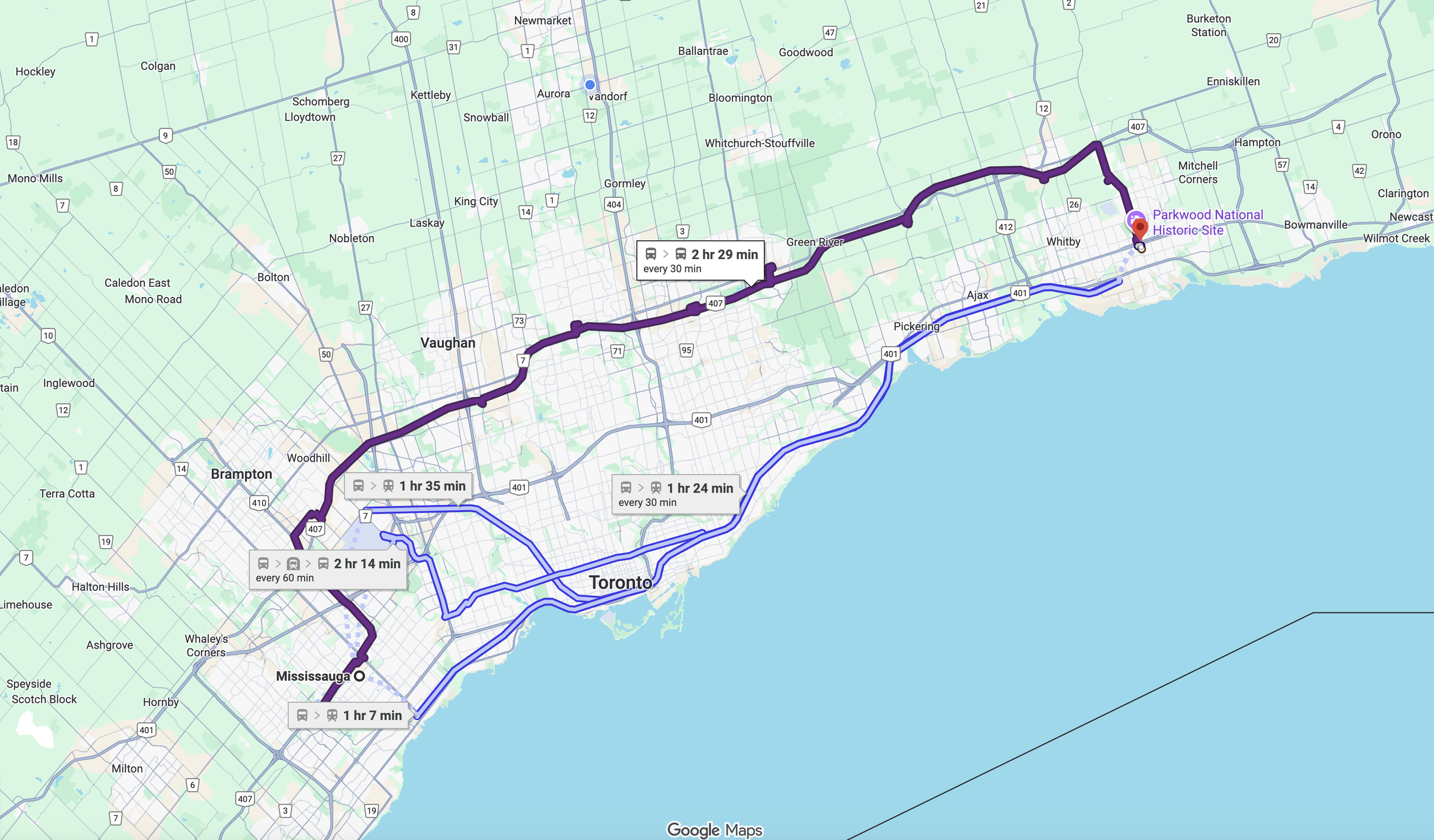
GTA Crosstown Sustainable Transit & Affordable Housing Across the 407 Corridor
Accelerating Communities and Transportation (ACT) Program
The provincial lands along the 407 Corridor should be comprehensively planned and developed to benefit the people of Ontario.
Transit-Oriented Communities (TOCs)/Urban Villages, combined with inter-regional transit mobility, represent a return to people-first communities that bring housing, commerce, and green amenity space together to enable lifestyles that Ontarians expect and deserve.
The Missing East–West Link for the Greater Toronto Area
The Greater Toronto Area is growing rapidly, yet its transportation and housing systems are struggling to keep pace. Congestion now costs the regional economy billions of dollars every year, housing affordability has reached crisis levels, and too many residents are forced to rely on long, inefficient commutes by car. Despite decades of investment, the GTA still lacks a true east–west rapid transit backbone capable of supporting future growth.
Sustainable Transit & Affordable Housing Across the 407 Corridor
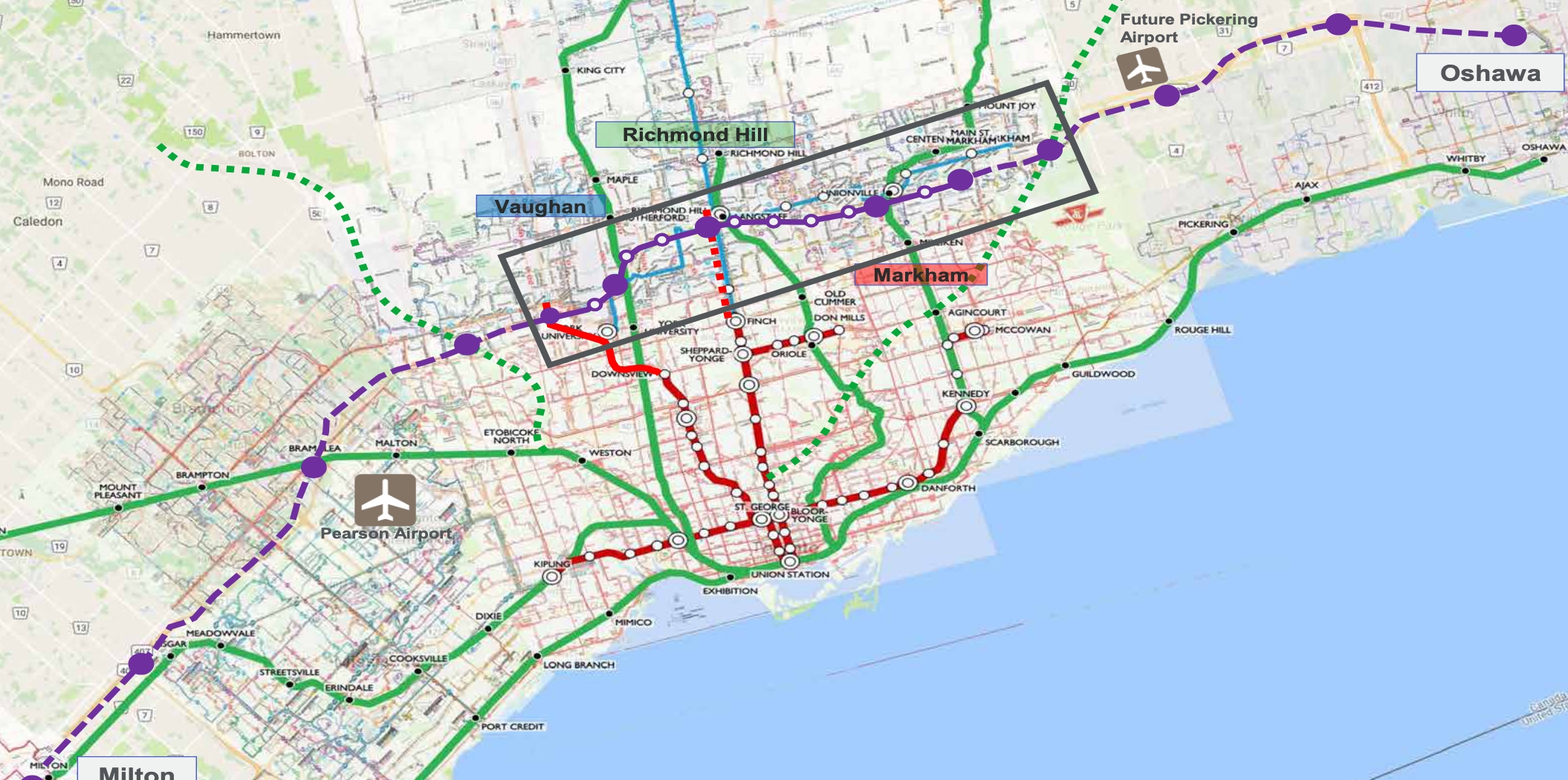
The GTA Crosstown is a bold proposal to address these challenges by transforming the Highway 407 corridor into a high-speed, low-carbon transit spine that connects communities from Oshawa to Milton. By pairing modern regional transit with affordable, walkable housing, the Crosstown offers a new way to build the GTA — one that prioritizes people, sustainability, and long-term economic resilience.
This is not just a transportation project. It is a city-building strategy designed to unlock opportunity across the entire region.
What This Project Is — and Isn’t
The GTA Crosstown is a proposal and framework, not a finalized government project. It does not replace existing transit plans or override local decision-making. Instead, it is meant to spark informed discussion, encourage alignment, and provide a credible starting point for regional collaboration.
The GTA Was Never Designed for East–West Travel — And It Shows
If you live in the Greater Toronto Area, chances are you’ve felt it: trips that should take 20 minutes stretching into an hour or more, not because of distance, but because of how the region is structured. The GTA’s transportation system was largely built to move people in and out of downtown Toronto. What it was never designed to do well is move people across the region.
Why Building Transit Without Housing No Longer Works
For decades, governments have tried to solve congestion by building transit — and then tried to solve housing affordability separately. The result has been predictable: transit lines that underperform and housing developments that lock residents into long, car-dependent commutes.
What the World’s Best Transit Systems Teach Us About the GTA’s Future
In places like Japan, Germany, South Korea, and Hong Kong, transit works because it is integrated into daily life and long-term planning. Stations are centres of activity. Service is frequent and reliable. Most importantly, rail is treated as economic infrastructure, not just a transportation expense.

Solving Two Crises Together
The GTA Crosstown is based on a simple but critical idea: transportation and housing must be planned together. Building transit without housing limits ridership and affordability. Building housing without transit locks people into long commutes and car dependence. The Crosstown addresses both challenges at the same time.
-
The transit system itself is envisioned as fast, frequent, and reliable. Trains would operate at regional speeds, with all-day, two-way service that makes transit a realistic alternative to driving. Seamless connections to GO Transit, subway lines, LRTs, and bus routes ensure that the Crosstown functions as part of a unified regional network rather than a standalone line.
-
Housing is integrated directly into station areas, ensuring that people can live close to reliable transit. A mix of housing types and incomes is central to the vision, with a commitment to including affordable housing as a core component of every station community. By reducing the need for car ownership and long commutes, the Crosstown helps lower the true cost of living for households across the region.
-
This approach allows the GTA to grow upward and inward rather than outward, protecting farmland and green spaces while making better use of existing infrastructure.
The Vision - Reimagining the 407 Corridor
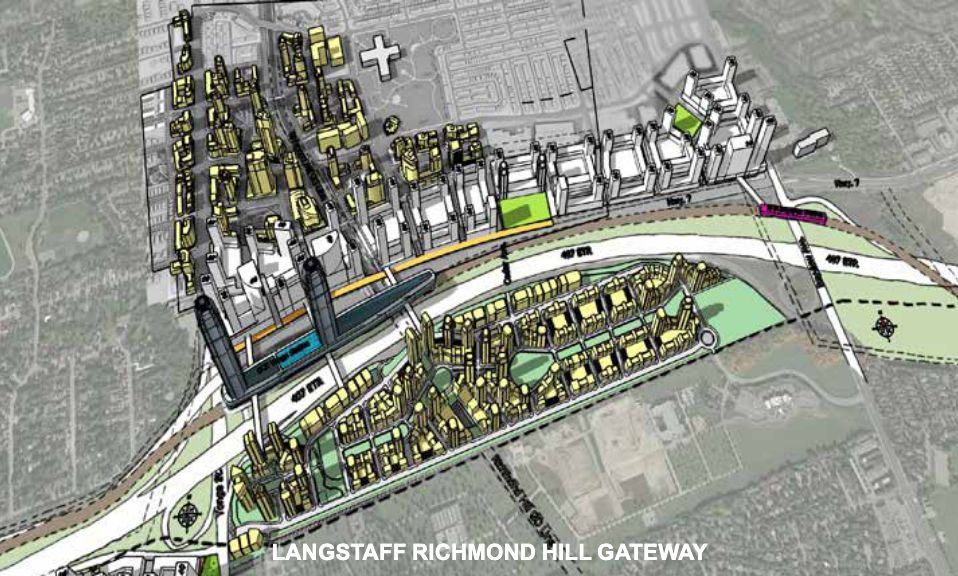
For decades, the 407 corridor has functioned primarily as a utility and highway corridor, carrying traffic and high-voltage transmission lines across the region. While essential, this land has remained largely underutilized in terms of its broader economic and social potential.
The GTA Crosstown reimagines the corridor as a place for people — not just infrastructure.
At its core, the Crosstown proposes a continuous east–west rapid transit line that complements, rather than duplicates, the GTA’s existing radial transit network. Instead of forcing most trips through downtown Toronto, the Crosstown allows people to travel efficiently between regions, employment centres, and communities across the GTA. It connects Durham, York, Peel, Halton, and Toronto through a single integrated corridor.
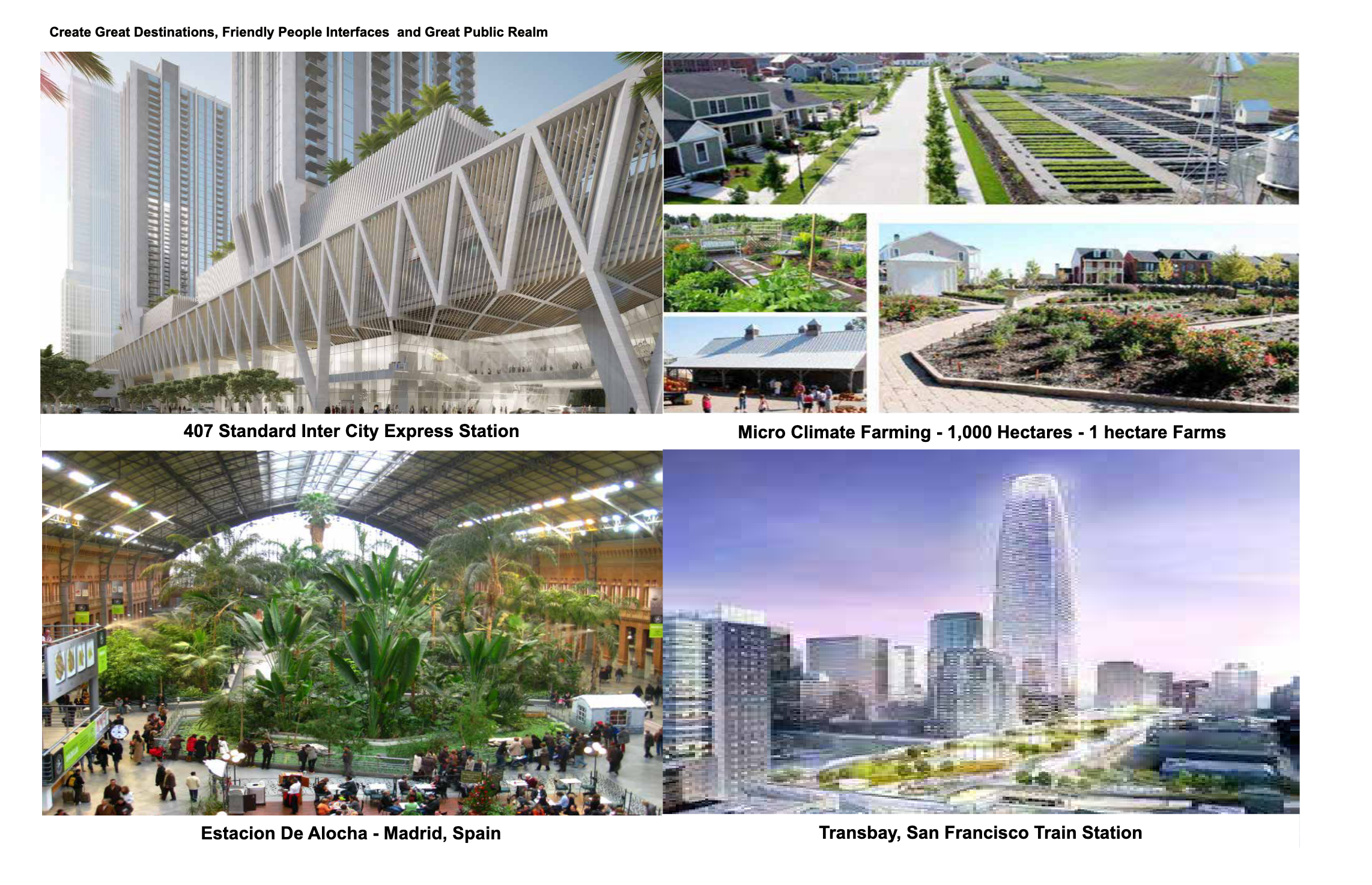
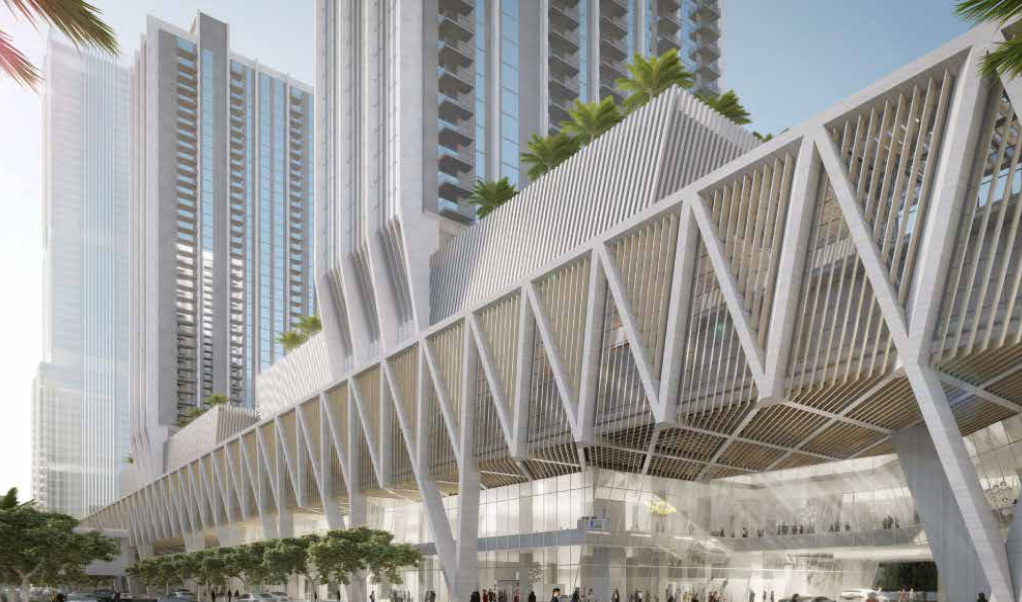
Each station along the line is envisioned as a complete, rail-integrated community. These are compact, walkable neighbourhoods built around transit, where housing, jobs, services, and public spaces are located within a short walk of the station. Together, these communities form a continuous urban corridor that supports growth without sprawl.
An Invitation to Engage
The future of the GTA will be shaped by the decisions made today. The GTA Crosstown invites governments, communities, industry partners, and residents to explore a shared vision for a more connected, affordable, and sustainable region.